Mortgage Lending and Uncertainty
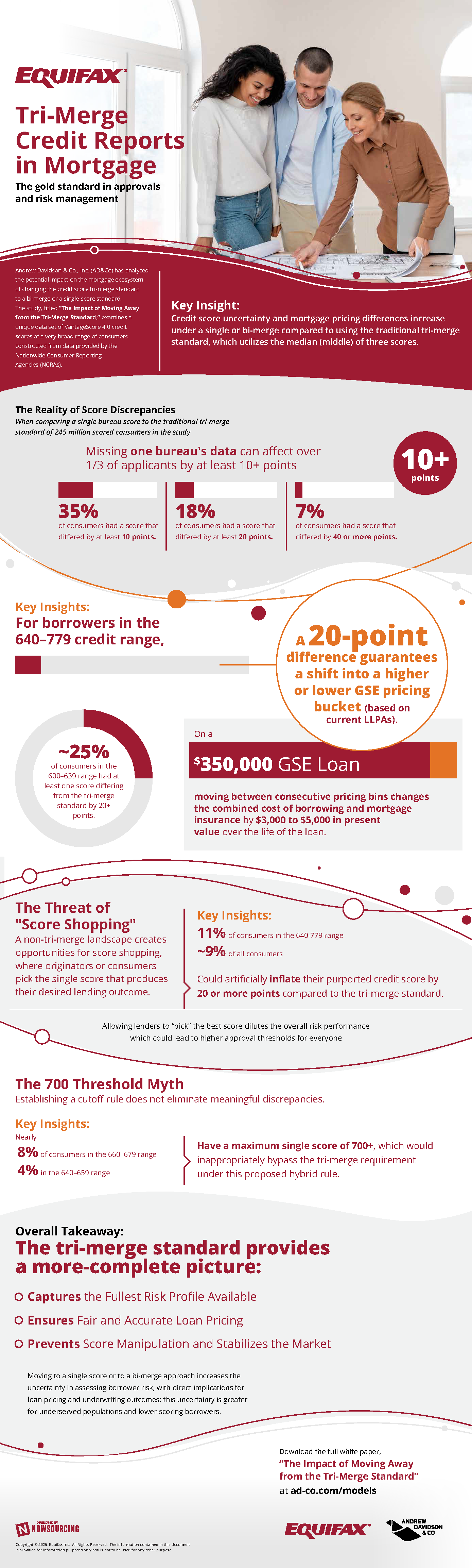
Uncertainty is one of the most costly challenges in mortgage lending, which often stems from the use of incomplete credit information. Any missing financial behaviors, histories, and tradelines can create blind spots during the underwriting process, leading to lenders struggling with determining exactly how risky a borrower is. Even the smallest difference in credit data can change loan prices, qualification outcomes, and affordability, as mortgage pricing is determined by credit score ranges, possibly costing borrowers substantially over the life of a loan.
The effects of uncertainty extend beyond borrowers and lenders. To manage such uncertainty, investors who support mortgage lending can also respond by demanding stricter borrower requirements, increasing fees, making adjustments to mortgage-backed securities, and limiting the entire loan origination process, as their contributions rely on transparent and consistent credit evaluations. These changes can increase borrowing costs across the market, making financing increasingly less accessible to underserved populations and borrowers with lower credit scores.
Reducing uncertainty is not just about using a wider range of data sets. It is also about improving confidence in lending decisions. Having a fuller understanding of a borrower’s creditworthiness gives lenders greater confidence in their risk assessments, helping support stability, consistent pricing, and a more predictable lending process.
Source: Equifax